Istio Ambient Mesh, Explained Simply
Learn how Istio ambient mesh works, when to use ztunnel and waypoint proxies, and how it compares with sidecar-based service mesh architecture.
I have been trying to build a simpler mental model for service mesh. Istio is powerful, but the first explanation usually becomes a wall of terms: sidecars, Envoy, mTLS, telemetry, policies, gateways.
This is the short version I would give to someone starting out.
What problem does Istio solve?
In Kubernetes, services talk to each other all the time:
- frontend calls backend
- backend calls payments
- payments calls database
Without a mesh, every team has to think about retries, timeouts, identity, encryption, traffic rules, and observability in their own application code.
Istio moves a lot of that behavior into infrastructure. The application keeps doing application work. The mesh handles service-to-service concerns.
The older model: sidecars
Traditionally, Istio puts an Envoy proxy beside every application pod. Traffic goes through that proxy before leaving or entering the pod.
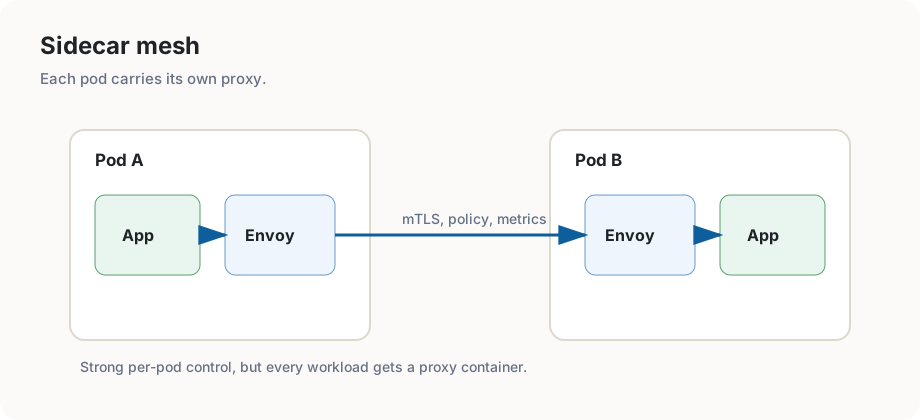
This is a good model because the proxy is close to the app. It can understand HTTP traffic, enforce policies, collect metrics, and route requests.
The cost is operational complexity. Every workload gets another container. Upgrades and resource usage touch every application pod. For large clusters, that can become a lot to manage.
Ambient mesh: same idea, different placement
Ambient mesh changes where the mesh logic runs. Instead of putting a sidecar in every pod, Istio splits the data plane into two layers:
ztunnel: a lightweight proxy on each node for secure Layer 4 trafficwaypoint: an optional proxy for Layer 7 features like HTTP routing and richer authorization
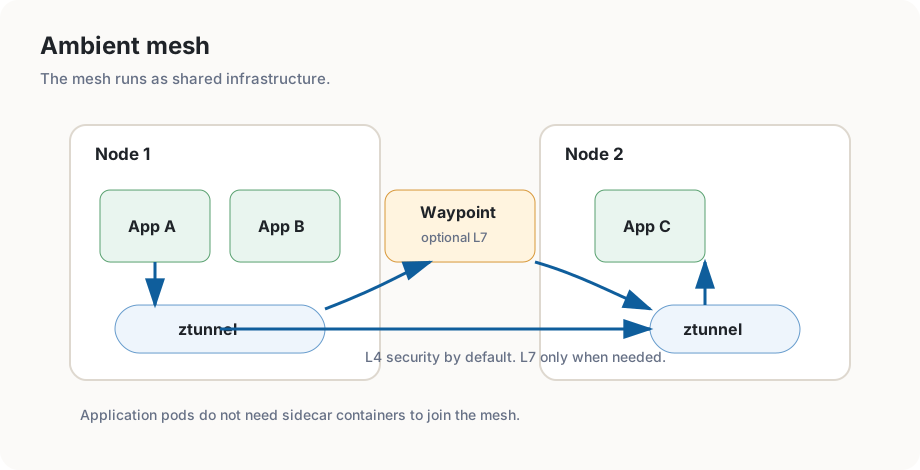
The nice part is the upgrade path. You can start with the secure overlay, then add waypoint proxies only where you need HTTP-aware behavior.
My mental model
Think of ambient mesh as two switches:
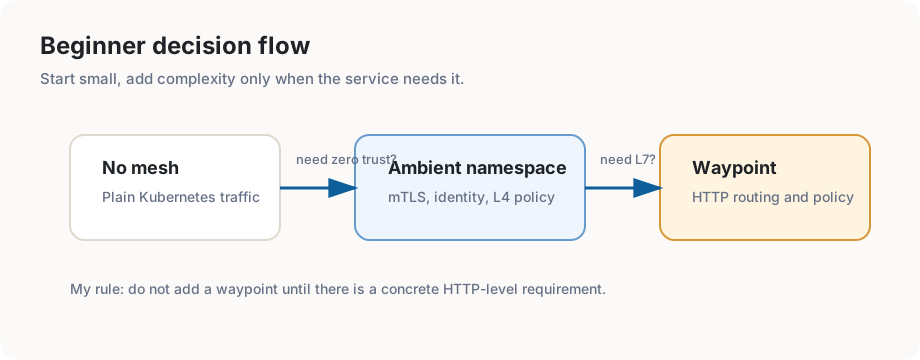
First switch: do I want workloads in this namespace to get mesh identity, mTLS, basic telemetry, and L4 policy? If yes, enable ambient mode.
Second switch: do I need HTTP-level behavior such as path-based routing, request-header policy, retries, or tracing? If yes, add a waypoint.
That is it. You do not need to understand every Istio feature on day one.
When I would use ambient
I would reach for ambient mesh when:
- I want mTLS between services without changing app code
- I want a mesh but do not want sidecars in every pod
- I want to adopt Istio gradually, namespace by namespace
- I only need heavier Layer 7 features for some services
I would still be careful before using any mesh. If the system is small, simple Kubernetes networking plus good application metrics may be enough. A service mesh is infrastructure, and infrastructure has a cost.
A tiny example
The shape of adoption looks like this:
kubectl label namespace apps istio.io/dataplane-mode=ambient
That brings the namespace into ambient mode.
Later, if a service needs Layer 7 policy or routing, add a waypoint for that boundary. I like this because it keeps the default path small and makes the advanced path explicit.
Final thought
The big idea behind ambient mesh is not “Istio without Envoy” or “Istio but magic”. It is Istio with the data plane moved out of each application pod, and split into layers.
For a beginner, that is the useful takeaway:
Start with secure service-to-service traffic. Add HTTP-aware features only where they are actually needed.
References I found useful: the Istio ambient overview, the waypoint proxy docs, and the Istio 1.24 ambient GA announcement.